The Hidden Price of Seeing Clearly: How the U.S. Optical Industry Charges You More Than It Should
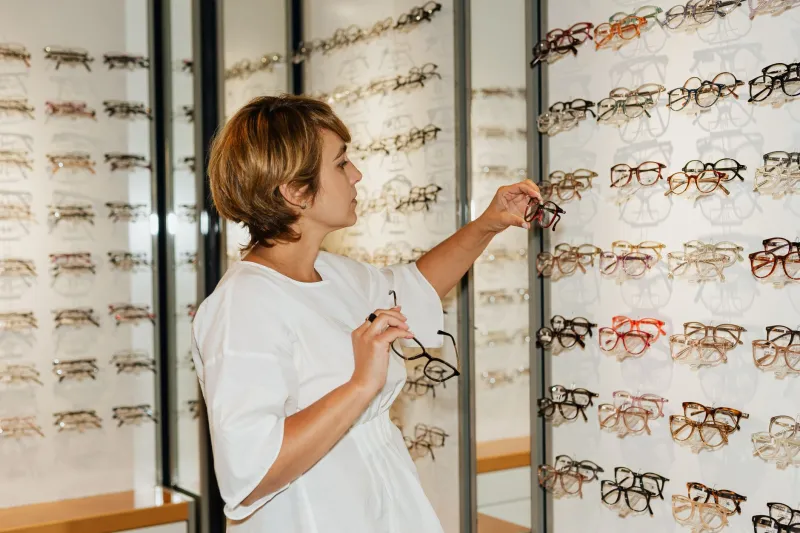
For most Americans, buying eyeglasses follows a familiar script: visit an optometrist, receive a prescription, walk twenty feet to the attached optical shop, and emerge an hour later with a receipt that somehow totals more than a car payment. The experience feels routine. The pricing, however, is anything but.
The United States optical market generates over $40 billion annually, yet it remains one of the least price-transparent sectors in all of American healthcare. Patients rarely comparison-shop because they don't know they can — or because the process feels too opaque to navigate. The result is a system where identical prescriptions, fitted into near-identical frames, can carry price tags that differ by hundreds of dollars depending on where a patient happens to walk through the door.
Understanding why that gap exists — and how to close it — begins with examining exactly where the money goes.
Why the Same Glasses Cost $300 at One Chain and $800 at Another
The optical retail industry operates on a markup model that would be extraordinary in almost any other consumer category. Independent optical laboratories and major lens manufacturers typically sell wholesale lenses for a fraction of the retail price. A single-vision lens that retails for $200 at a premium optical boutique may have left the lab for $20 or less. Frame markups follow a similar pattern, with retail prices often running five to ten times the wholesale cost.
This isn't inherently unusual — retail markup is a feature of virtually every industry. What distinguishes optical retail is the degree to which pricing is shielded from patient scrutiny. Unlike pharmaceuticals, where patients can look up generic equivalents, or medical procedures, where hospitals are now required to publish price lists, eyewear pricing operates in a largely self-regulated environment where comparison is difficult by design.
Large optical chains — the ones attached to big-box retailers or operating dozens of mall locations — benefit from volume purchasing agreements that dramatically reduce their wholesale costs. Yet many pass only a fraction of those savings to consumers, using the balance to fund advertising, real estate, and profit margins. Smaller independent opticians, meanwhile, may charge premium prices that reflect genuine craftsmanship and personalized service — or they may simply reflect the absence of competitive pressure in a given neighborhood.
The practical outcome for patients is a pricing landscape where quality and cost share no reliable relationship.
The Add-On Economy: When Upgrades Become the Product
Perhaps the most significant driver of inflated optical bills is not the base price of frames or lenses — it is the layered system of upgrades and enhancements that optical staff are often trained, and sometimes incentivized, to recommend at the point of sale.
Anti-reflective coating, blue light filtering, photochromic tinting, scratch resistance, UV protection, high-index thinning, and digital lens surfacing are among the most commonly offered add-ons. Some of these features provide genuine clinical value for specific patients. Anti-reflective coatings, for instance, can meaningfully reduce nighttime glare for individuals who drive frequently after dark. High-index lenses offer a real benefit to patients with strong prescriptions who would otherwise wear uncomfortably thick lenses.
The problem arises when these upgrades are presented as near-universal necessities rather than patient-specific considerations. A person with a mild prescription who primarily wears glasses indoors has little clinical need for high-index lenses. A patient who rarely uses screens may derive minimal benefit from a blue light filter. Yet both may leave an optical appointment having purchased both, at a combined cost of several hundred dollars.
Optical retailers are not obligated to distinguish between what a patient needs and what a patient might find marginally convenient. That distinction — and the financial consequences attached to it — falls largely on the patient.
The Prescription Portability Right Most Americans Don't Use
Federal law requires that optometrists and ophthalmologists provide patients with a copy of their eyeglass prescription at the conclusion of an examination, at no additional charge, regardless of whether the patient purchases eyewear at that location. This right, established under the Eyeglass Rule enforced by the Federal Trade Commission, exists specifically to enable competition — to allow patients to take their prescription elsewhere and obtain eyewear at a price and quality level of their choosing.
Despite this protection, a significant share of American patients continue to purchase their eyewear at the same location where they received their examination, often without requesting price comparisons elsewhere. The reasons are understandable: the optical shop is convenient, the staff are familiar, and the process of comparison shopping for eyewear feels unfamiliar and time-consuming.
Online optical retailers have complicated this picture considerably. Platforms that allow patients to upload their prescriptions and order glasses starting at prices well below $100 have introduced genuine competition into a market that historically lacked it. Quality varies — and patients with complex prescriptions or fitting challenges may find online purchasing less reliable — but for straightforward prescriptions, the price differential can be substantial.
Insurance: Protection or Illusion?
Vision insurance adds another layer of complexity to the optical pricing equation. Many Americans carry vision coverage through their employer, and a majority assume that coverage meaningfully controls their out-of-pocket eyewear costs. In practice, the relationship between vision insurance and actual savings is less straightforward than it appears.
Most vision plans operate through networks of participating providers. Those providers agree to accept insurance reimbursement, but they are often permitted to sell non-covered upgrades at full retail price — upgrades that may be recommended during the same visit at which the insurance benefit is applied. A patient who arrives expecting their insurance to cover the cost of new glasses may find that the frames they're shown are all in an "above-allowance" tier, or that the lens package recommended by the optician includes add-ons that fall entirely outside coverage.
Understanding precisely what a vision plan covers — and what it does not — before arriving at an appointment is one of the most practical steps a patient can take to avoid unexpected costs.
Navigating the System Without Compromising Your Care
None of this is to suggest that quality eye care and fairly priced eyewear are mutually exclusive. Many opticians provide transparent, honest service. Many optical retailers offer genuine value. The challenge is that the system does not reward patients who fail to ask questions — and it does not penalize providers who fail to volunteer pricing information.
Several practical approaches can help patients make more informed decisions. Requesting an itemized breakdown of every lens feature and its individual cost before agreeing to a purchase allows patients to evaluate each upgrade on its own terms. Asking an optician which add-ons are clinically relevant to a specific prescription and lifestyle — and which are optional — shifts the conversation from sales to guidance. Obtaining quotes from at least one additional source, whether an online retailer or a competing optical shop, establishes a reference point that makes pricing easier to evaluate.
For patients with straightforward prescriptions, online optical retailers represent a legitimate and often dramatically less expensive option. For those with high prescriptions, progressive lenses, or specific fitting requirements, the value of an experienced optician may justify a higher price — but that value should be articulated, not assumed.
Clarity of vision is not a luxury. The cost of achieving it, however, is shaped as much by market structure and patient awareness as by any clinical necessity. Understanding that distinction is, in many ways, the first step toward seeing the system for what it actually is.