Is It Actually Time for New Glasses or Contacts? A Practical Cost-Benefit Framework for Every American Lifestyle
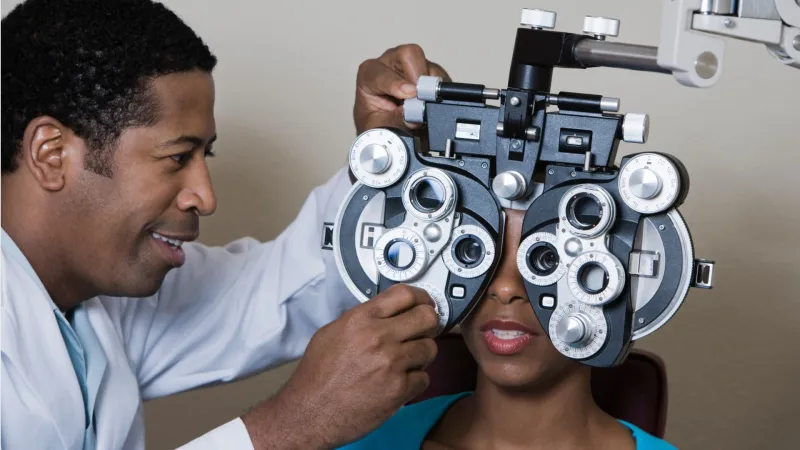
Photo: optometrist showing patient eyeglass frames during eye exam consultation, via cdn.careeronestop.org
The question arrives reliably, usually when a reminder card appears in the mail or when squinting at a menu becomes impossible to ignore: is it time for new glasses? For many Americans, the answer involves a genuine financial calculation. A new pair of prescription glasses with quality lenses can cost anywhere from $200 to over $700 out of pocket, depending on lens type and frame selection. A year's supply of daily contact lenses runs $400 to $600 for many prescriptions. These are not trivial expenditures, and the decision to make them deserves more analytical rigor than the phrase "it's been about a year" typically provides.
The reality is that the right replacement interval varies substantially from person to person. Some individuals genuinely need annual updates. Others are stable for two years or longer. And some are unknowingly wearing outdated corrections that are costing them far more in productivity, comfort, and even safety than the price of a new prescription ever would.
Why the Annual Rule Exists — And Where It Falls Short
The recommendation to have eyes examined and eyewear updated annually originates from sound clinical reasoning. Vision changes accumulate gradually, making them difficult to self-detect. The eye examination also serves as a health screening tool, capable of identifying early signs of conditions ranging from glaucoma to hypertension. For these reasons, annual comprehensive exams remain the professional standard recommended by the American Optometric Association.
However, the exam and the prescription update are two distinct considerations. A patient can — and should — receive an annual eye health examination without necessarily requiring new lenses every time. Conflating the two leads to either unnecessary spending or, more dangerously, the avoidance of exams because patients assume they will be pressured into expensive purchases they do not currently need.
The relevant question is not simply whether twelve months have passed, but whether the current prescription is still accurately serving the demands placed on the visual system.
The Profession Factor: When Your Job Changes the Math
For working Americans, the professional environment is among the most powerful determinants of when updated eyewear delivers measurable return on investment.
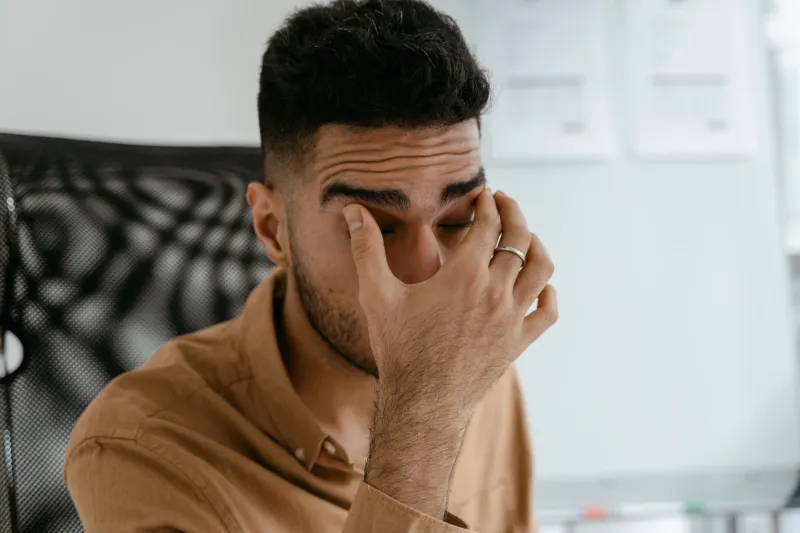
Consider a graphic designer or video editor who spends six to eight hours daily working with color-accurate displays at close range. For this individual, even a quarter-diopter shift in prescription — a change that would be functionally invisible during casual daily activities — can translate into eye strain, headaches, and reduced output quality over the course of a workday. The productivity cost of suboptimal correction in a visually intensive profession can comfortably exceed the cost of new lenses within a single month.
Conversely, a retiree whose primary visual demands are reading, watching television, and driving may experience the same prescription change with minimal functional impact. For this individual, updating lenses at a two-year interval, provided the eye examination remains annual, may be entirely appropriate.
Professional transitions warrant particular attention. An individual who moves from a primarily outdoor role to a desk-based position involving sustained screen work will often find that a prescription optimized for distance vision is poorly suited to their new visual demands. A job change is a legitimate clinical trigger for an updated consultation, regardless of when the last prescription was written.
Life Stage and the Accelerating Rate of Change
Age is the single most reliable predictor of prescription change frequency. Vision in the twenties and early thirties tends to be relatively stable, and many individuals in this demographic genuinely require updates only every two years. From the late thirties onward, the crystalline lens inside the eye begins losing its flexibility — a process called presbyopia — and the rate of prescription change accelerates meaningfully.
For Americans in their forties and fifties, annual prescription reviews become not just a recommendation but a practical necessity. Presbyopia does not progress in a smooth, linear fashion. It tends to advance in steps, and an individual who was comfortable with their progressive lenses eighteen months ago may find that the near-vision zone of those same lenses is now inadequate for comfortable reading.
Parents of school-age children should also apply heightened vigilance to their children's prescription update intervals. Myopia — nearsightedness — frequently progresses rapidly during childhood and adolescence, and an outdated prescription in a developing visual system is associated with accelerated myopic progression. For pediatric patients, the annual update is not a guideline to be questioned on cost grounds; it is a clinical priority.
The Contact Lens Calculation: Different Variables, Different Answers
Contact lens wearers face a somewhat different cost-benefit analysis than glasses users. The prescription itself may change at the same rate, but the lens replacement schedule introduces an additional variable.
Daily disposable lenses represent the highest per-day cost but the lowest risk of complications related to lens deposit accumulation and microbial contamination. For individuals with dry eye tendencies, a history of infections, or inconsistent cleaning habits, the premium associated with daily lenses frequently pays for itself in avoided discomfort and reduced risk of sight-threatening infections.
Extended-wear and monthly replacement lenses carry lower per-lens costs but require rigorous compliance with replacement schedules. Research consistently demonstrates that American contact lens wearers tend to over-extend lens replacement intervals — a practice that increases infection risk and, paradoxically, may increase the total cost of ownership when the resulting discomfort drives more frequent use of rewetting drops or, in serious cases, clinical treatment.
For contact lens wearers who have experienced a meaningful lifestyle change — significantly increased outdoor time, a new job in a dusty or chemically exposed environment, or the onset of allergy symptoms — a consultation with an eye care provider about whether the current lens modality remains the optimal choice is warranted outside the standard annual cycle.
Practical Signals That Justify an Unscheduled Visit
Beyond calendar and lifestyle considerations, certain specific experiences should prompt an evaluation regardless of when the last appointment occurred. These include: persistent headaches localized around the eyes or forehead after visual tasks, difficulty driving at night that was not present previously, a noticeable increase in the distance at which reading material must be held, and any sudden change in vision quality, which always warrants urgent evaluation.
The appearance of halos around lights, double vision, or any loss of visual field are symptoms requiring prompt clinical attention and should not be deferred pending an annual appointment cycle.
Making the Investment Decision with Confidence
Updating eyewear is a health investment, not a luxury expenditure — but like any investment, it should be made deliberately. Americans who approach the decision with clarity about their professional demands, their rate of visual change, and their lifestyle context are better positioned to make choices that deliver genuine value.
The most cost-effective approach for most adults is consistent: maintain annual comprehensive eye health examinations without exception, and update lenses when the examination reveals a clinically meaningful prescription change or when lifestyle shifts create new visual demands that the current correction cannot adequately meet. That framework protects both vision and financial wellbeing — and it reflects the kind of informed, patient-centered care that should define every interaction with the eye health system.