When Your Zip Code Determines Whether You Can See: Eye Care Inequality Across America
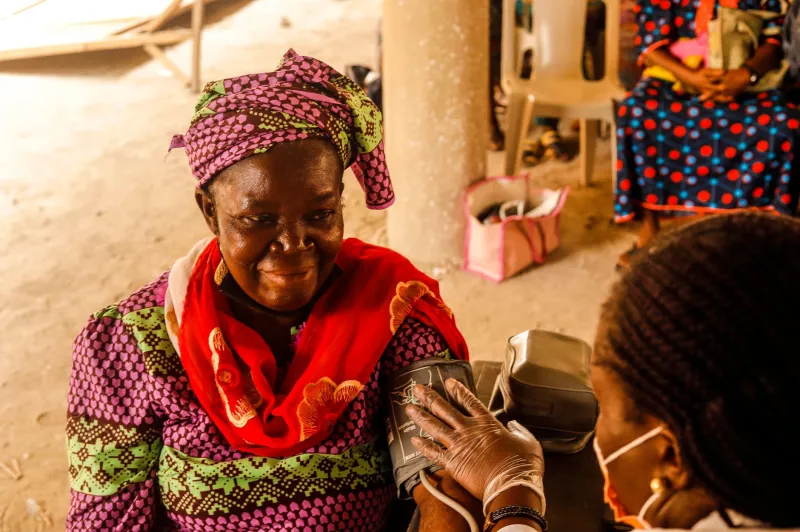
Vision is foundational. It shapes a child's ability to learn, an adult's capacity to work, and an older person's ability to live independently. Yet in the United States, access to the care that protects vision is distributed with striking unevenness — concentrated in wealthy suburban corridors and largely absent from the rural counties and urban neighborhoods where need is often greatest.
This is not a peripheral issue. According to data from the Centers for Disease Control and Prevention, approximately 93 million American adults are at high risk for serious vision loss, yet fewer than half report having visited an eye doctor in the past year. Within that population, the disparities are stark: low-income adults, racial and ethnic minorities, and rural residents are consistently less likely to receive timely eye care — and far more likely to experience preventable vision loss as a result.
The Geography of Vision Loss
The relationship between geography and eye care access begins with a simple scarcity problem. The United States faces a significant shortage of eye care providers in rural and underserved areas. Ophthalmologists and optometrists tend to establish practices in metropolitan areas, where patient volume, insurance reimbursement rates, and professional infrastructure are more favorable. The consequence is that large portions of the country — particularly in the rural South, Appalachia, the Mississippi Delta, and the Great Plains — have ophthalmologist-to-population ratios that would be considered critically inadequate by any reasonable public health standard.
In some rural counties, the nearest ophthalmologist is more than 50 miles away. For a working adult without reliable transportation, that distance is not an inconvenience — it is an effective barrier. For an elderly patient on a fixed income without a driver's license, it may represent an insurmountable obstacle. The eye exam that could detect early glaucoma, diabetic retinopathy, or a retinal tear simply does not happen. The condition progresses. The vision loss that follows is not inevitable — it is the predictable outcome of a system that has failed to distribute care equitably.
The Insurance Gap and Its Visual Consequences
Geography is compounded by economics. Vision care occupies an unusual and disadvantageous position in the American insurance landscape. Traditional Medicare, which covers the majority of Americans over 65, does not include routine vision benefits — a coverage gap that disproportionately affects older low-income adults who rely on Medicare as their primary insurer. Medicaid coverage for vision care varies by state, with some states offering robust benefits and others providing only minimal or emergency coverage for adults.
For the uninsured and underinsured — populations that skew heavily toward lower-income brackets — the out-of-pocket cost of a comprehensive eye exam, prescription eyewear, and any necessary follow-up care can be prohibitive. A pair of prescription glasses, which most Americans with refractive error consider a basic necessity, can cost several hundred dollars at a retail optical chain. For a family living near the poverty line, that expenditure competes directly with rent, groceries, and utilities.
The result is a pattern of deferred care that clinicians in underserved communities describe with frustrating consistency: patients who arrive with conditions that could have been managed effectively at an earlier stage, presenting instead with advanced disease because every prior opportunity for intervention was foreclosed by cost.
Diabetic Retinopathy: A Crisis Within a Crisis
No condition illustrates the consequences of unequal eye care access more clearly than diabetic retinopathy. The United States has one of the highest rates of diabetes in the developed world, and the disease disproportionately affects low-income and minority communities — the same populations least likely to have access to regular ophthalmic screening.
Diabetic retinopathy is, in the early stages, entirely asymptomatic. Patients feel no pain, notice no change in their vision, and have no reason to seek care unless a systemic screening program brings them to an eye care provider. When that screening infrastructure is absent — when there is no ophthalmologist in the county, no insurance to cover the visit, and no transportation to reach the nearest clinic — the window for intervention closes quietly and permanently.
Diabetic retinopathy is the leading cause of new blindness among working-age Americans. A substantial proportion of those cases are preventable with timely detection and treatment. The fact that they are not being prevented is not a medical failure — it is a structural one.
Solutions Gaining Ground
The picture is not without cause for measured optimism. Across the country, a range of organizations and initiatives are working to bridge the access gap with practical, scalable approaches.
Mobile eye clinics have emerged as one of the most effective models for delivering care to geographically isolated populations. Organizations such as the Vision Van program and various hospital-affiliated outreach initiatives deploy fully equipped examination vehicles to rural communities, schools, and community centers — bringing comprehensive eye exams and on-site eyeglass dispensing directly to patients who cannot reach traditional clinical settings. Early data from several programs suggest that mobile delivery models achieve strong rates of previously undetected condition identification, precisely because they reach populations that standard referral pathways miss.
Community health centers, which operate under a federally qualified health center (FQHC) designation and serve patients regardless of ability to pay, have expanded vision care integration in recent years. When optometry services are embedded within the primary care environment that low-income patients already access, compliance rates improve and conditions are identified earlier.
Teleophthalmology represents a particularly promising frontier. Diabetic retinopathy screening programs using retinal imaging cameras operated by trained technicians — with images read remotely by ophthalmologists — have been deployed successfully in community health settings, pharmacies, and even primary care offices. These programs dramatically reduce the specialist access barrier for screening purposes, enabling early detection without requiring patients to travel to a specialist's office.
Nonprofit optical programs such as Vision to Learn, which provides free eye exams and glasses to low-income students, and Unite For Sight, which supports access efforts both domestically and globally, are filling gaps that the commercial system and public insurance programs have left unaddressed.
A Problem With a Known Shape
What distinguishes the eye care access crisis from many public health challenges is that its contours are well understood. We know which communities are underserved. We know which conditions are being missed. We know which interventions reduce preventable vision loss when properly resourced and deployed. What has been lacking is not knowledge — it is the sustained political and institutional commitment to act on it.
For readers with the ability to advocate, donate, or support local vision care access initiatives, that knowledge carries weight. For patients in underserved communities, it underscores the importance of seeking out community health resources, mobile screening events, and nonprofit programs that may be available in your area.
Vision loss that results from a lack of access is not a medical inevitability. It is a policy outcome — and policy outcomes can change.