Sight Unseen: How Millions of Americans Are Being Left Behind by a Broken Eye Care System

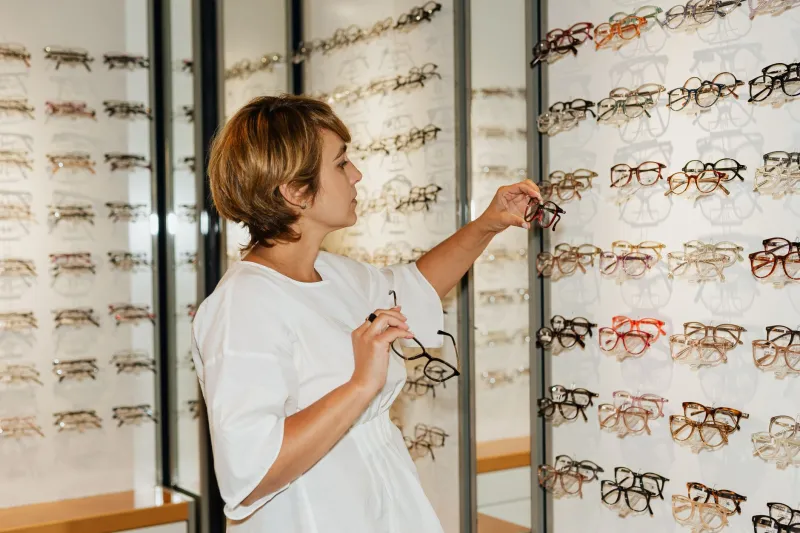
Photo: rural healthcare access mobile vision clinic community eye exam, via as1.ftcdn.net
In the United States, the ability to see clearly is often treated as a personal responsibility. Schedule your appointment. Pick up your glasses. Renew your prescription. But for tens of millions of Americans living in rural communities or low-income urban areas, that seemingly straightforward process is anything but simple. Geographic isolation, provider shortages, and insurance gaps have quietly created a two-tiered vision care system — one in which your zip code may determine whether you ever receive a proper eye exam at all.
The consequences are not merely inconvenient. Untreated refractive errors contribute to reduced academic performance in children, diminished workplace productivity in adults, and an elevated risk of preventable blindness in older populations. What begins as a gap in access frequently ends as a gap in health outcomes.
The Geography of Eye Care Deprivation
According to data from the Health Resources and Services Administration (HRSA), more than 80 percent of the United States' rural counties qualify as Health Professional Shortage Areas for primary care — and optometry often mirrors that pattern. In states such as Mississippi, West Virginia, and parts of the rural Southwest, residents may need to travel 60 to 100 miles or more to reach the nearest licensed optometrist or ophthalmologist.
This is not simply a matter of inconvenience. For elderly patients who no longer drive, for agricultural workers without paid leave, and for families without reliable transportation, that distance is effectively a closed door. A 2022 report from the American Optometric Association found that rural residents were significantly less likely than their urban counterparts to have received a comprehensive eye exam within the past two years — a disparity that compounds over time.
The urban dimension of this crisis is equally troubling, though less frequently discussed. In low-income neighborhoods within cities like Detroit, Baltimore, and Memphis, optometry practices are sparse. Medicaid reimbursement rates for vision services remain low enough in many states that private providers decline to accept the coverage, leaving patients with nominal insurance but nowhere to use it.
Why Providers Aren't Moving In
The shortage of eye care professionals in underserved areas is not primarily a training problem. The United States graduates thousands of optometrists each year, and ophthalmology residency slots are competitive. The issue is distribution — and the economic logic that governs it.
Optometry practices are businesses. They require patient volume, adequate reimbursement, and infrastructure investment to remain viable. Rural communities frequently offer none of these conditions reliably. Student debt among newly licensed optometrists averages well above $150,000, which makes the financial risk of establishing a low-volume rural practice particularly daunting for early-career clinicians.
State-level scope-of-practice regulations add another layer of complexity. In some states, optometrists are permitted to diagnose and treat a broader range of ocular conditions, making rural practice more sustainable. In others, restrictive laws limit what optometrists can do, effectively requiring patients to seek specialist care that is even harder to access.
Telehealth's Promise — and Its Limits
The expansion of telehealth following the COVID-19 pandemic offered genuine hope for underserved communities. Platforms capable of conducting remote visual acuity testing and prescription renewal emerged rapidly, and several states temporarily relaxed regulations to allow broader teleoptometry services. For patients seeking straightforward prescription updates or basic screenings, these tools provided a meaningful alternative to driving across a county.
Companies such as Warby Parker and 1-800-Contacts introduced online prescription verification tools that allow patients to renew corrective lens prescriptions remotely under certain conditions. Direct-to-consumer optical retailers have also reduced the cost of frames and lenses substantially, addressing affordability concerns for patients who do have access to a prescription but struggle to afford traditional retail pricing.
Yet telehealth has real limitations that advocates are careful not to obscure. A remote visual acuity test cannot detect early-stage glaucoma, macular degeneration, or diabetic retinopathy — conditions that require in-person examination with specialized equipment. For populations already at elevated risk of these diseases, including older adults, individuals with diabetes, and African Americans who face disproportionate glaucoma risk, the telehealth workaround may address the symptom of poor access while leaving the underlying danger undetected.
The American Academy of Ophthalmology has consistently cautioned that remote prescription services should complement, not replace, comprehensive in-person eye exams. That distinction matters enormously in underserved communities where a telehealth visit may represent the only eye care contact a patient has in years.
Community Programs and Public Health Initiatives
Several organizations are attempting to bridge the gap through mobile and community-based models. Vision van programs operated by academic medical centers, nonprofit organizations, and some state health departments bring examination equipment directly to rural schools, community centers, and agricultural worksites. These initiatives have demonstrated measurable success in increasing screening rates among children and migrant workers — two populations with particularly high rates of undetected vision problems.
Federally Qualified Health Centers (FQHCs), which are required to serve patients regardless of ability to pay, have begun integrating optometry services at a growing number of locations. Expanding optometry's presence within the FQHC framework represents one of the more structurally sound approaches to sustained access improvement, as it ties vision care into an existing safety-net infrastructure rather than relying on periodic outreach events.
Legislative efforts at the federal level have proposed including comprehensive vision benefits in Medicare — a reform that has long been advocated by optometry associations and patient advocacy groups. The inclusion of limited vision benefits in the Inflation Reduction Act of 2022 was a partial step, though advocates argue that meaningful coverage for routine exams and corrective lenses remains out of reach for many Medicare beneficiaries.
What Genuine Progress Would Require
Addressing the optometry access gap in any durable way requires action across multiple fronts simultaneously. Loan forgiveness programs targeted specifically at optometrists and ophthalmologists who commit to practicing in shortage areas could shift the economic calculus for new graduates. Regulatory modernization that expands teleoptometry's scope — while maintaining appropriate safeguards for comprehensive care — would extend the reach of existing providers. And Medicaid reimbursement reform that makes vision care economically viable for safety-net providers would reduce the insurance-in-name-only problem that affects millions of low-income Americans.
Technology alone will not close this gap. The most sophisticated remote screening platform is of limited value to a patient who lacks broadband internet, which remains unavailable or unaffordable in many of the same rural communities that lack eye care providers. Access inequality tends to cluster — transportation, connectivity, insurance, and provider availability often fail simultaneously in the same communities.
A System That Demands More Honesty
The optometry access crisis is not a secret. Researchers have documented it, advocacy organizations have publicized it, and patients living within it experience it daily. What has been slower to materialize is the sustained political and institutional will to treat vision care as an essential health service rather than an elective benefit.
For the millions of Americans who cannot currently access timely eye care, the consequences are already accumulating — in classrooms where children struggle to read the board, in workplaces where adults strain to perform tasks safely, and in clinics where preventable blindness arrives as a late-stage diagnosis. Clearer vision, in every sense, requires more than better lenses. It requires a system willing to see who it is leaving behind.